
Integration of Systems: The Future of Farming
Farming, as we know it, is evolving. The future belongs to those who understand that no component of agriculture exists in isolation. Crops, livestock, soil, water, and even energy—they’re all part of one interconnected ecosystem. Integration of systems isn’t just a buzzword; it’s a blueprint for more resilient, efficient, and sustainable farming.
For centuries, traditional farmers intuitively practiced forms of integrated agriculture—combining crops with livestock, recycling manure as fertilizer, and valuing every output as part of a larger cycle. Modern science is now validating what experience had already shown: when you design farms as complete systems, you reduce waste, improve soil health, and multiply productivity.
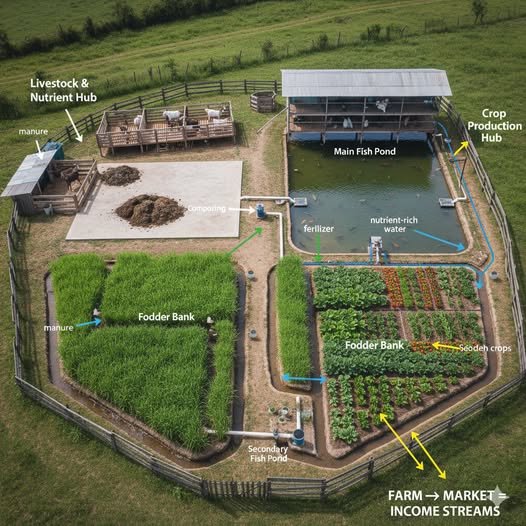
Integrated farming systems (IFS) are about connections:
- Crop residues feed livestock.
- Animal waste nourishes fields.
- Trees provide shade, fodder, and biodiversity.
- Fish ponds irrigate crops.
- Solar or biogas energy powers essential farm operations.
Each element supports another—creating a farm that’s both productive and environmentally sound.
Integrating systems means farmers can adapt better to climate change, reduce dependency on chemical inputs, and unlock new income streams. In short, integration builds resilience, something every farmer will need in the years ahead.
I’m excited to see so many of you learning about and experimenting with integrated approaches on your own farms. And if you want a deeper dive into how to design, manage, and benefit from an integrated farming system, I’ve detailed these practical strategies and real-world examples in my upcoming book, Integrated Farming System.
If you haven’t already, I hope you’ll pre-order your copy and join this movement toward smarter, greener agriculture. Because the future of farming isn’t just about growing more—it’s about connecting better.